Publications
Papers
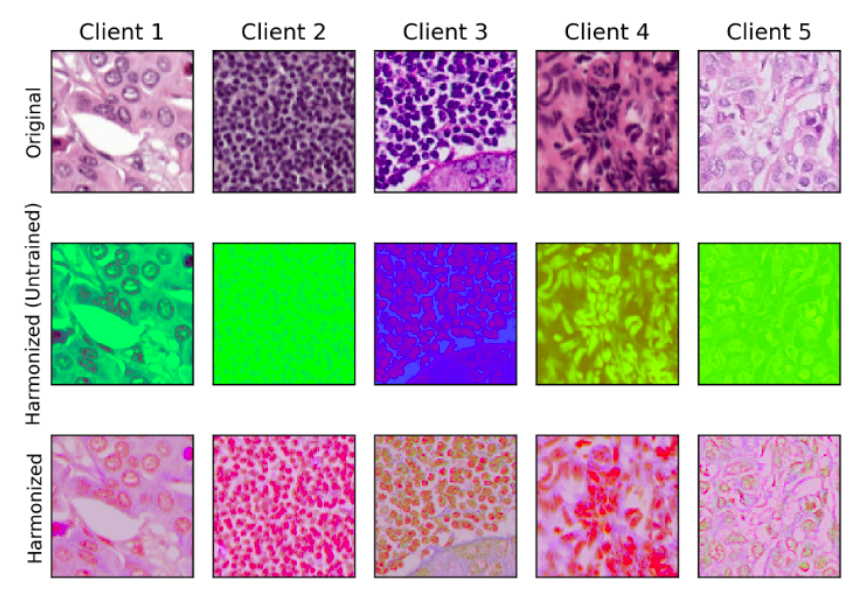
Towards Federated Learning Across Biobanks: Prototype Software from the 2026 Carnegie Mellon University–NVIDIA Hackathon
BioHackrXiv
This preprint presents prototype federated learning software developed during the 2026 Carnegie Mellon University–NVIDIA Federated Learning Hackathon for Biomedical Applications. The work demonstrates federated frameworks across biomedical tasks including disease subtyping, genetic association studies, histopathology harmonization, rare disease stratification, cancer subtyping, polygenic risk score aggregation, and multimodal clinical prediction.
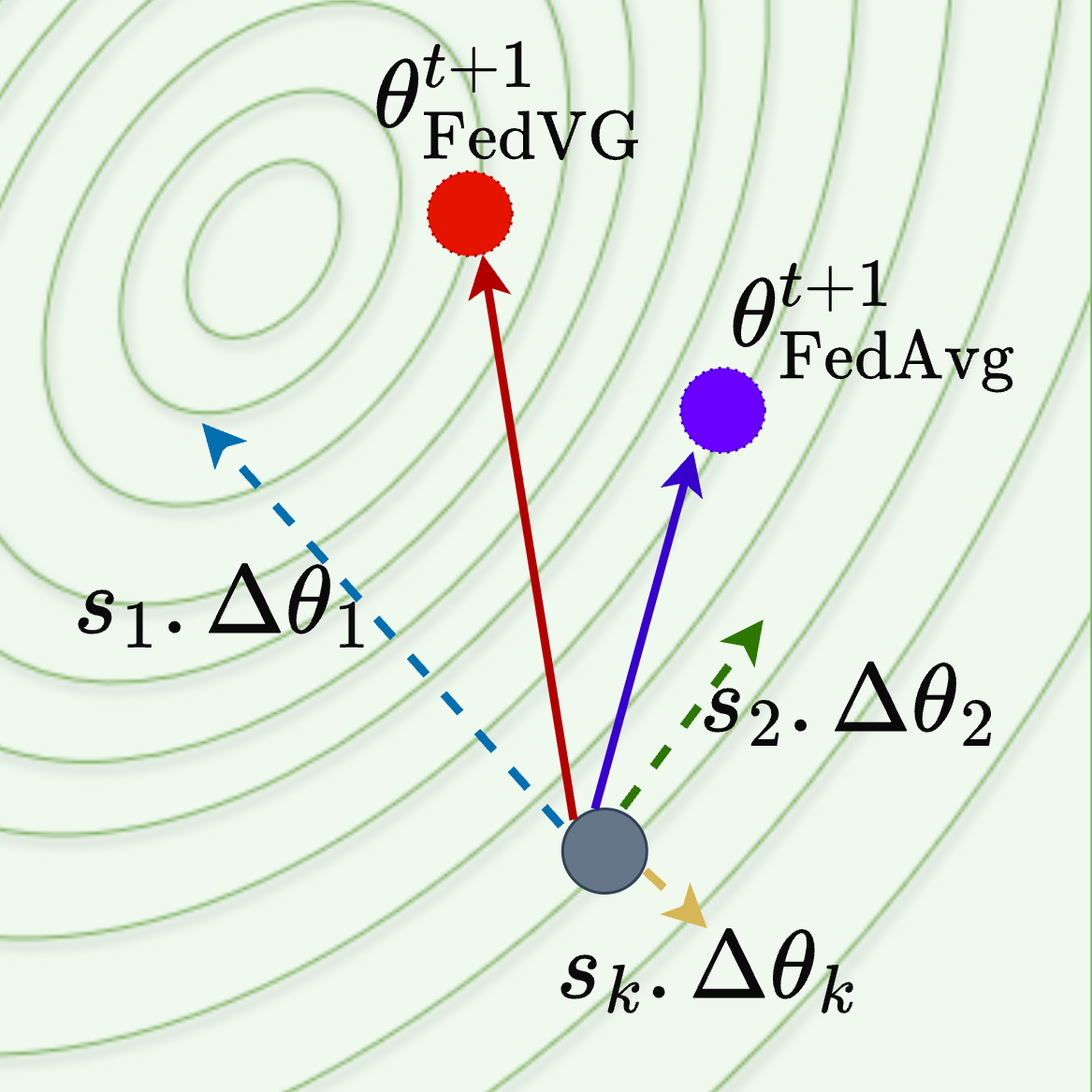
FedVG: Gradient-Guided Aggregation for Enhanced Federated Learning
CVPR Findings 2026
This study introduces FedVG, a gradient-guided federated aggregation framework designed to improve learning under client data heterogeneity. By using a global validation set and layerwise validation gradient norms, FedVG adaptively weights client models based on their generalization behavior, improving performance across natural and medical image benchmarks, especially in highly heterogeneous settings.
Local K-Similarity Constraint for Federated Learning with Label Noise
IEEE International Symposium on Biomedical Imaging (ISBI) 2026
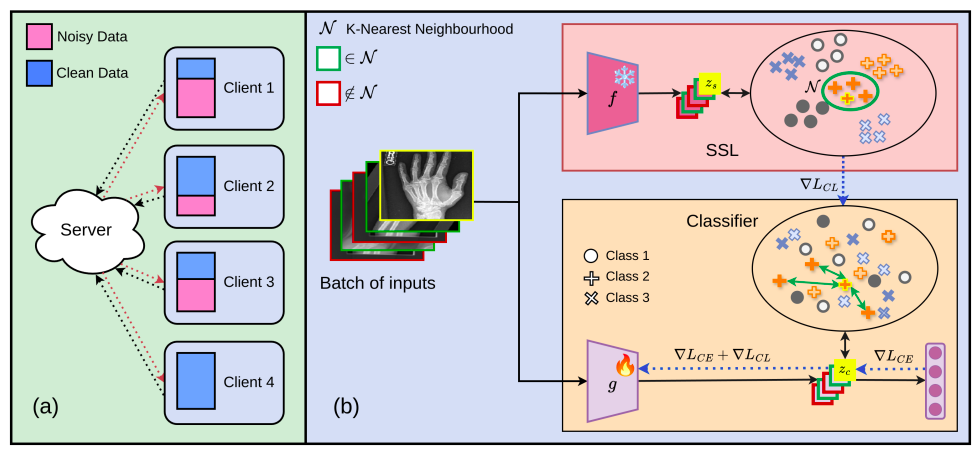
This study introduces a local regularization objective for federated learning with noisy labels. The method uses the representation space of a self-supervised pretrained model to enforce similarity between nearby examples within each client, improving robustness in heterogeneous federated settings with many noisy clients.
Federated Foundation Model for GI Endoscopy Images
arXiv preprint
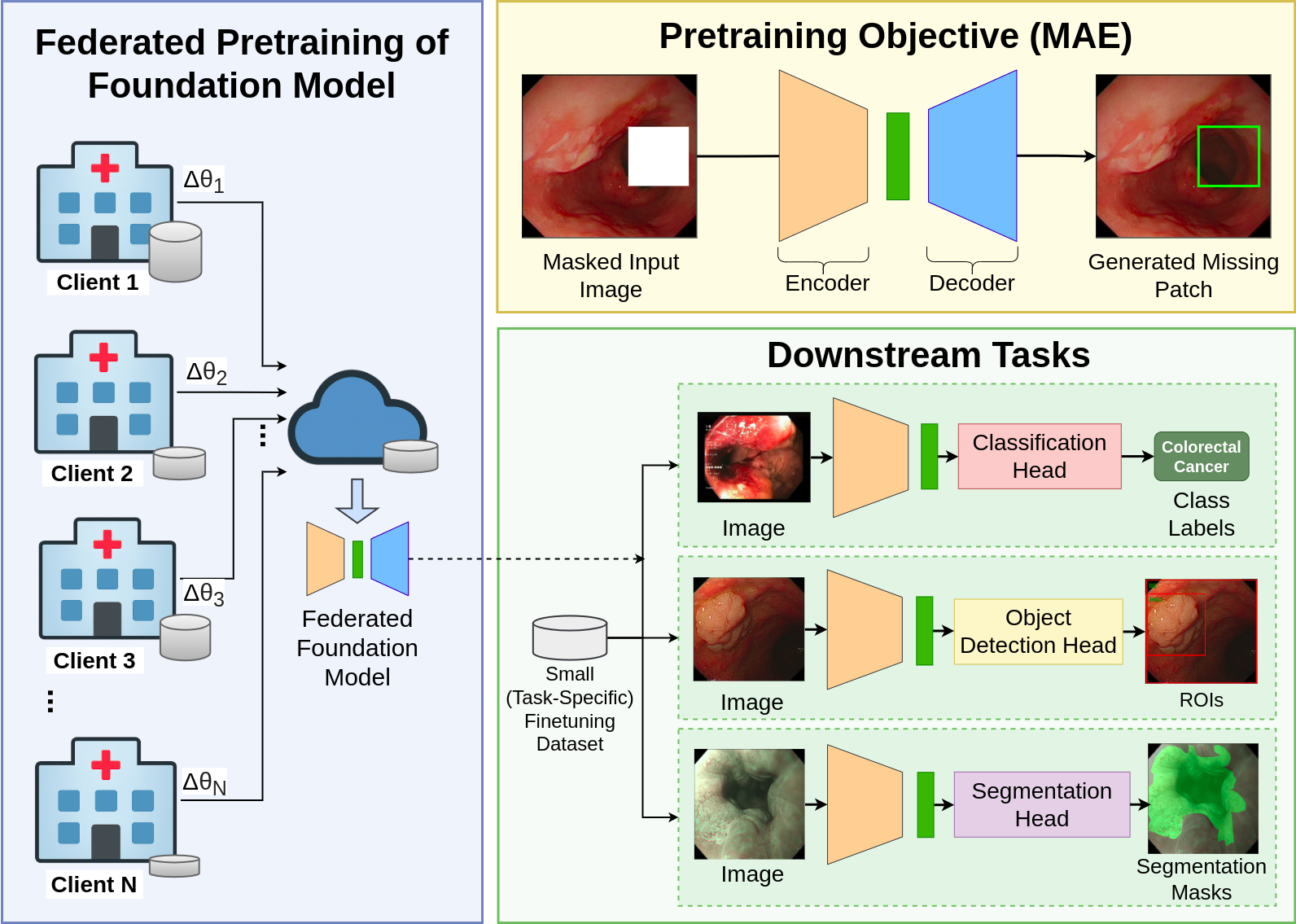
We propose a federated learning framework to train foundation models for gastrointestinal endoscopy imaging, allowing hospitals to collaboratively develop general-purpose models while keeping data private. Our approach is evaluated on classification, detection, and segmentation tasks, demonstrating improved performance in a privacy-preserving, federated setting.
AI analysis for ejection fraction estimation from 12-lead ECG
Scientific Reports
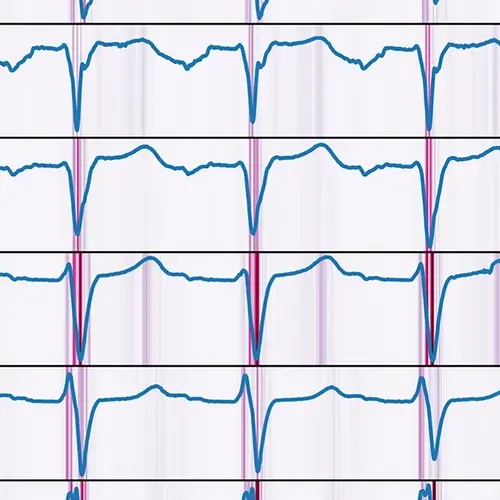
This study investigates the use of 12-lead ECG signals to estimate heart ejection fraction (EF) in a rural Appalachian population. Using a range of machine learning and deep learning models—including Transformers—our analysis shows deep learning models achieve the highest performance (AUROC ~0.86), with specific multi-lead combinations improving accuracy and model interpretability providing insights into predictive features.
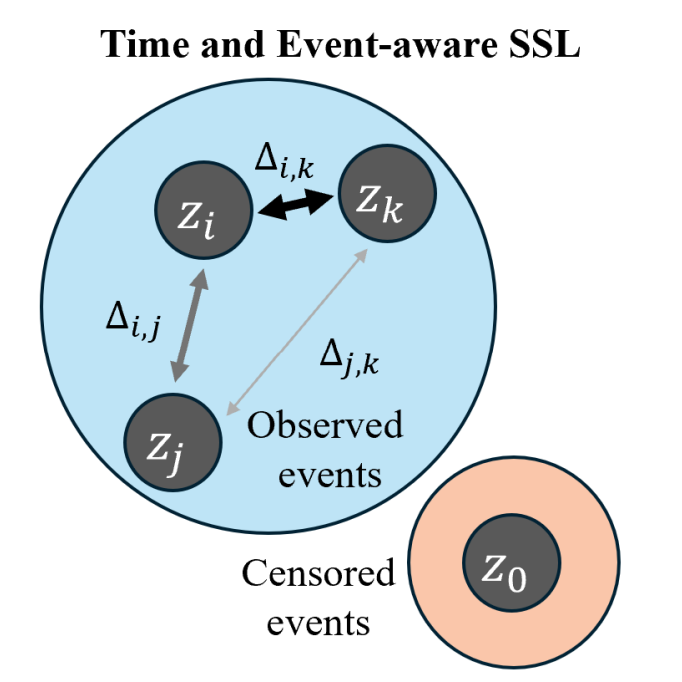
TE-SSL: Time and Event-aware Self Supervised Learning for Alzheimer's Disease Progression Analysis
MICCAI 2024
We introduce TE-SSL, a time and event-aware self-supervised learning framework for Alzheimer’s disease progression analysis. By incorporating time-to-event and event data as supervisory signals, TE-SSL improves representation learning and outperforms existing SSL methods in downstream survival analysis tasks.
Multimodal Federated Learning for Secure and Accurate Healthcare AI
arXiv preprint
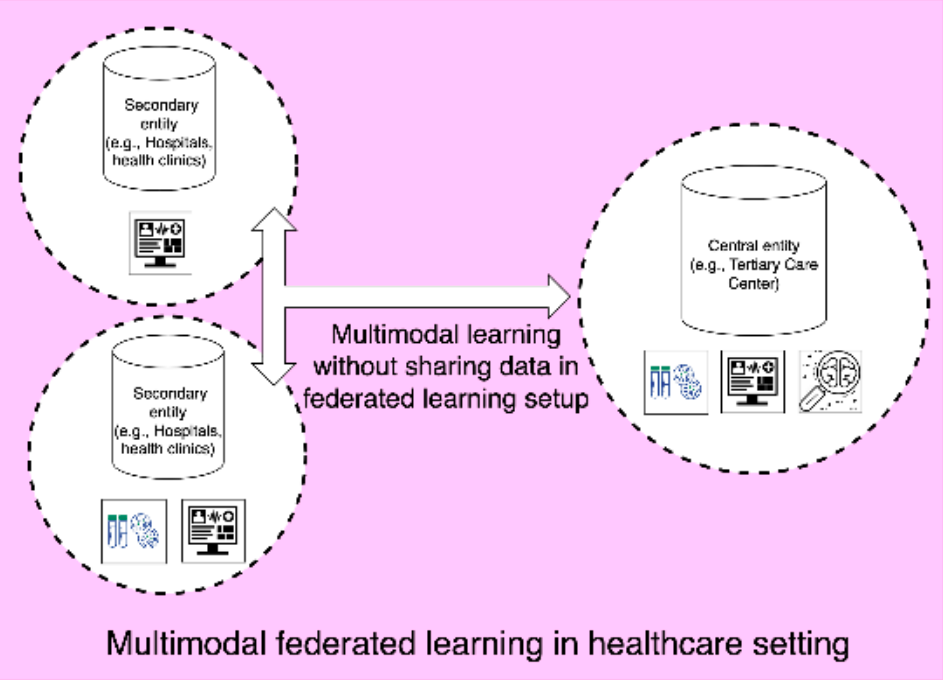
This paper reviews the role of multimodal federated learning in healthcare, highlighting its potential to combine diverse medical data while preserving patient privacy. It surveys state-of-the-art approaches, identifies current challenges and limitations, and outlines future directions for advancing secure and effective healthcare AI.
Near Real-Time Mobile Profiling and Modeling of Fine-Scale Environmental Proxies Along Major Road Lines of Nepal
ICMSI
We present a methodology using GPS-enabled mobile sensors to collect and model fine-scale environmental proxies (e.g., temperature, CO₂, PM₂.₅) along major roadways in Nepal, demonstrating the effectiveness of ARIMA and RNNs for real-time and historical climate modeling.
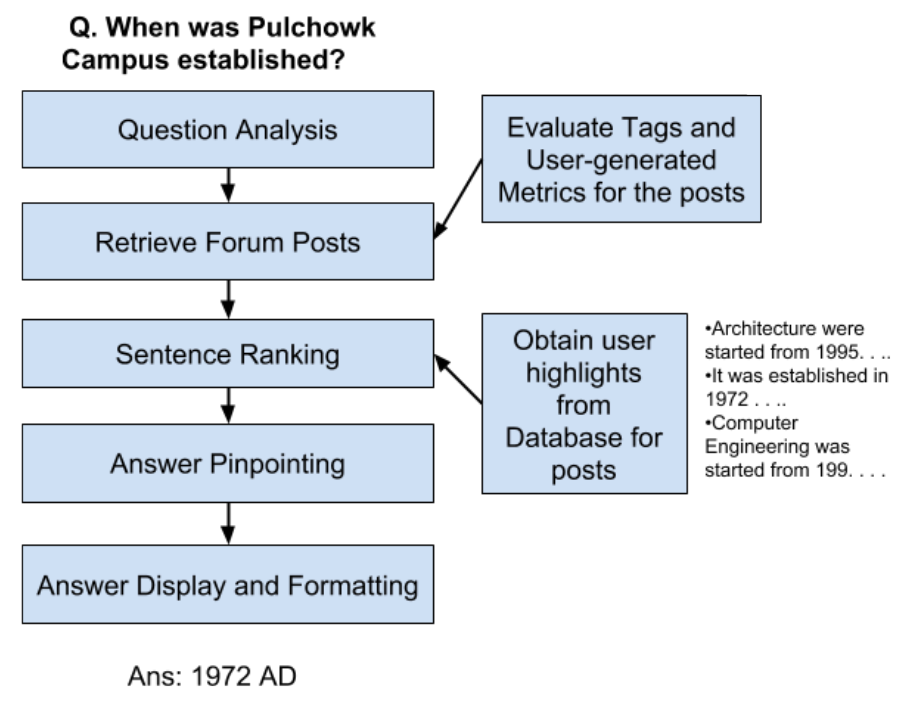
Sentence Ranking and Answer Pinpointing in Online Discussion Forums Utilizing User-generated Metrics and Highlights
NASCOIT
This work presents a framework for extracting precise answers from online discussion forums by combining sentence ranking with user-generated metrics and highlights. The approach enables accurate answer pinpointing, improving search relevance and supporting better question-answering in forums.